

Diving courses
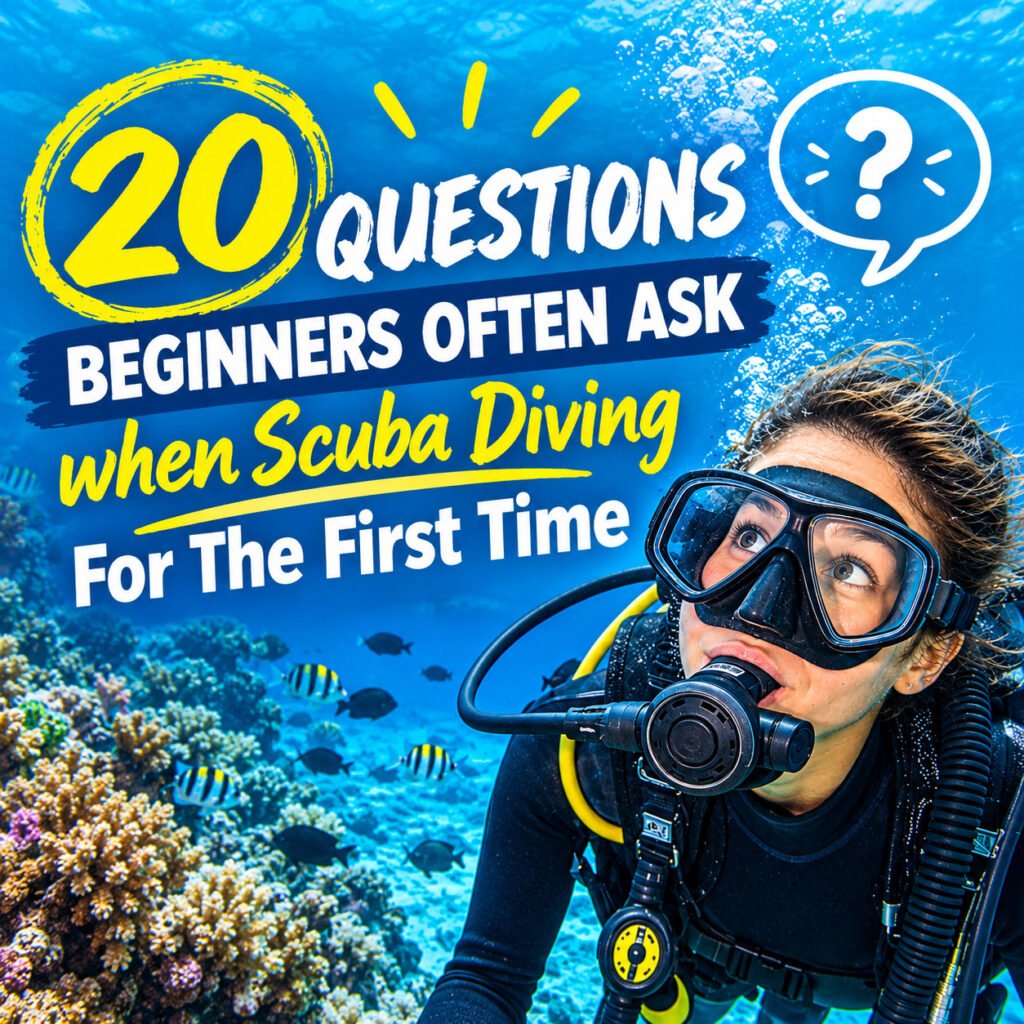
20 Questions Beginners Should Ask Before Scuba Diving in Phuket
Questions Beginners Should Ask before Scuba Diving in Phuket
1. Do I need to know how to swim to try scuba diving?
Answer: You don’t need to be an Olympic swimmer, but you do need to be comfortable and reasonably relaxed in the water. For beginner programs (like a Discover Scuba Diving experience), you will be closely supervised by a professional instructor at shallow depths, but basic water confidence and the ability to paddle or tread water are essential for your safety and comfort.
2. Can I scuba dive if I wear glasses or contact lenses?
Answer: Absolutely! If you wear contact lenses, you can keep them on—just let your instructor know so you can keep your eyes closed if water enters your mask. Alternatively, many dive centers can provide prescription dive masks tailored to your visual needs.
3. How deep will I go on my first try?
Answer: For your very first beginner dive, the maximum depth is strictly limited to 12 meters (about 40 feet). This shallow depth ensures plenty of natural sunlight, vibrant marine life, and easy, comfortable pressure equalization.
4. What does scuba gear feel like, and is it heavy?
Answer: Out of the water, the scuba tank and equipment are quite heavy (around 18 to 20 kilograms). However, once you step into the ocean, the water supports all that weight, making you feel virtually weightless. Breathing through the regulator feels completely natural after a few breaths of adjustment.
5. What if I panic or feel claustrophobic underwater?
Answer: It is completely normal to feel a bit nervous beforehand! Your instructor will start you in shallow, waist-deep water or right off the boat platform to take things at your own pace. You will be right next to your instructor the entire time, and you can pause, adjust, or surface whenever you feel the need.
6. How do I breathe underwater?
Answer: You breathe purely through your mouth via the regulator mouthpiece. You simply inhale and exhale deeply and slowly—just like you do on land. You cannot breathe through your nose because it is sealed inside the dive mask.
7. What happens if my mask fills with water or falls off?
Answer: Your instructor will teach you simple “mask clearing” techniques before you dive. If water gets into your mask, you just look slightly up, press the top of the mask frame against your forehead, and blow gently out through your nose. The air clears the water instantly.
8. How do I equalize my ears against water pressure?
Answer: As you descend, the water pressure increases, which can feel like a slight squeeze in your ears (similar to landing in an airplane). To counter this, you will learn to “equalize” every meter or so by pinching your nose softly and blowing gently against it, or by swallowing and moving your jaw.
9. Will I see sharks or dangerous marine life?
Answer: While Phuket’s waters host stunning marine life like sea turtles, moray eels, stingrays, and reef fish, encounters with large sharks are rare on beginner routes. Most reef sharks or marine creatures are peaceful and prefer to mind their own business. Your instructor points out the best sights and keeps you safe.
10. Are there medical conditions that prevent me from diving?
Answer: Yes. Because of pressure changes, conditions affecting your heart, lungs, ears, sinuses, or severe asthma can prevent you from diving. You will need to fill out a standard medical questionnaire beforehand; if you answer “yes” to any condition, a physician’s sign-off is required.
11. Can I fly on an airplane right after scuba diving?
Answer: No. Because nitrogen is absorbed into your body tissues under pressure, you must wait a mandatory safety period before flying to avoid decompression sickness. For a single day of beginner diving, current safety guidelines recommend waiting at least 12-18 hours before boarding a flight.
12. How old do you have to be to try scuba diving?
Answer: For introductory beginner programs (Discover Scuba Diving), the minimum age is 10 years old. Children younger than that can sometimes participate in surface-level snorkeling or specialized shallow pool diving programs.
13. How long does a beginner scuba experience take?
Answer: A typical experience includes safety briefings and basic skill practice (either in a swimming pool or shallow beach area), followed by actual open-water dives from a boat or shoreline alongside an instructor.
14. Do I need a certification to try it out?
Answer: No certification is required for a beginner discovery dive. Your instructor will provide a comprehensive safety briefing and teach you core skills right before your dive, allowing you to experience the underwater world without a prior course.
15. What should I bring with me on my first dive day?
Answer: Bring your swimwear, a towel, sunscreen (ideally reef-safe), sunglasses, a change of clothes, and cash or cards for any extra personal expenses. All specialized scuba gear, tanks, weights, and lunch/refreshments are typically provided on organized day trips.
16. Will I get seasick on the boat, and how can I prevent it?
Answer: Some people are sensitive to boat motion depending on sea conditions. To prevent seasickness, you can take over-the-counter motion sickness medication (like Dramamine) at least 30–60 minutes before boarding the boat, get a good night’s sleep, and avoid heavy, greasy foods right before departure.
17. Can I wear makeup, hair products, or jewelry while diving?
Answer: It’s best to avoid heavy makeup or oils because they can get into your eyes when water enters your mask or dirty the mask silicone, causing leaks. Leave expensive jewelry at home or on the boat so it doesn’t accidentally slip off into the ocean.
18. How do I communicate underwater if I can’t speak?
Answer: Because speech is impossible through a regulator, divers use a universal set of hand signals. Simple gestures like an “OK” sign (thumb and index finger looped), “thumbs up” (go up), “thumbs down” (go down), and pointing to things will be taught to you before you enter the water.
19. What if I wear heavy prescription glasses? Can I get a custom mask?
Answer: Yes, many professional dive centers carry optical rental masks with negative diopters (magnifications for nearsightedness). If your prescription is very high or requires astigmatism correction, consult your dive center ahead of time or consider wearing soft contact lenses during the dive.
20. What is the next step if I love my first scuba experience?
Answer: If you catch the diving bug, your first day can often count toward a full certification course, such as the PADI Open Water Diver or SSI Open Water Diver course. This certification takes about 2 to 3 days, equips you with independent diving skills, and allows you to dive anywhere in the world down to 18 meters!