


Diving courses, snorkeling
What’s the Difference Between Snorkeling and Scuba Diving? Complete Beginner Guide
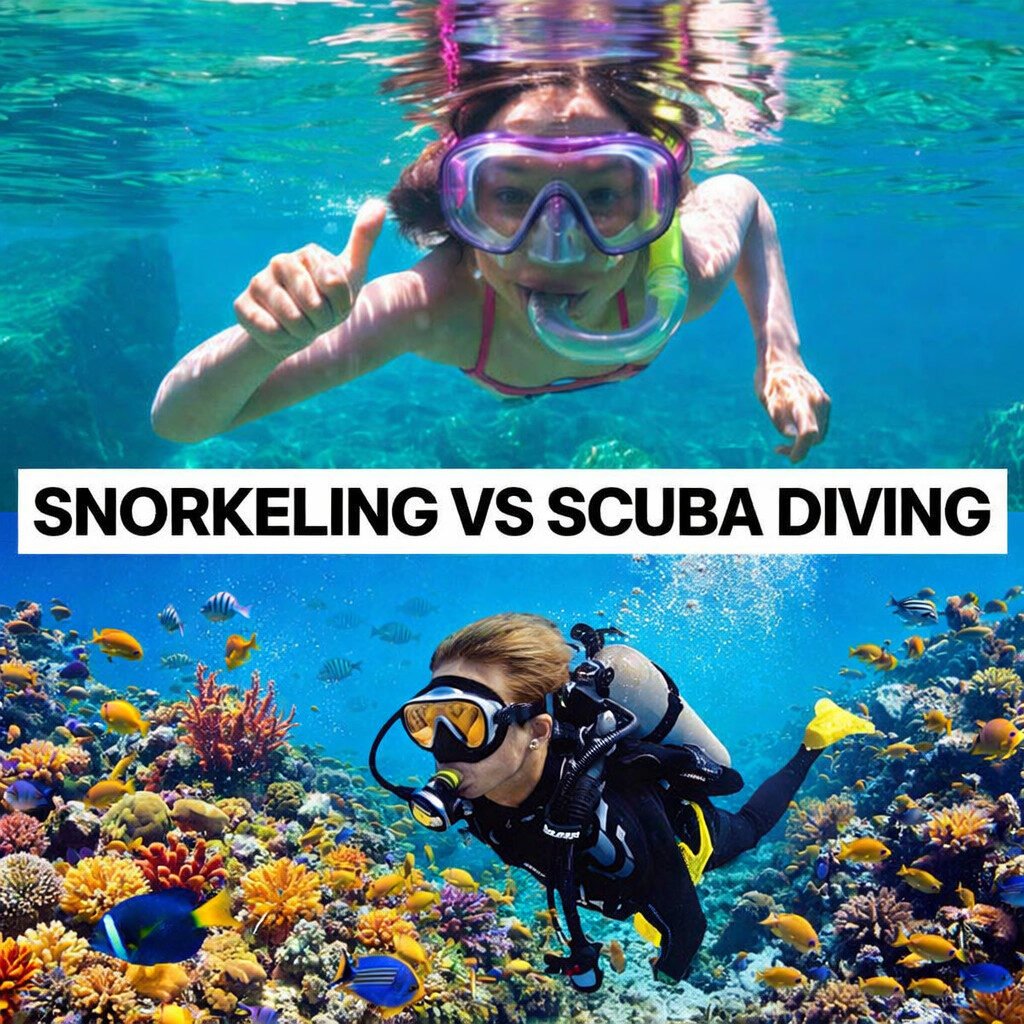
In Phuket Snorkeling and scuba diving are both ways to look beneath the surface, but they work very differently. Snorkeling keeps you at or near the surface while you breathe through a tube, and scuba diving takes you underwater with a tank of air so you can stay down much longer. Most beginners start with snorkeling because it is cheap, quick to learn and needs almost no equipment, while scuba diving requires formal training but opens up far more of the underwater world
In this guide you will see how they differ in depth, breathing, gear, training, safety, cost, and overall experience, plus which activity suits different types of people.
How You Breathe Underwater
Snorkeling: face in the water, body on the surface
With snorkeling you float on the surface wearing a mask and a snorkel, which is a curved plastic tube that lets you breathe air from above the water. Your face is in the water looking down, but your lungs are still breathing normal air from the atmosphere, not from a tank. You can make short duck‑dives below the surface, but you must hold your breath and come back up as soon as you feel the need to breathe
Scuba diving: tank and regulator
Scuba diving uses a tank of compressed air on your back and a regulator in your mouth that delivers air at the surrounding water pressure. This system allows you to breathe normally underwater without needing to surface, which is why divers can stay at depth for many minutes at a time. Because you are breathing under pressure, you must learn specific safety rules about ascent speed and time limits to avoid injuries
Depth and Time Underwater
Typical snorkeling depths
Most snorkeling happens in shallow water where reefs or rocks come close to the surface, often between 1 and 5 metres deep. Average snorkelers might dive down briefly to 3–4 metres and experienced ones can sometimes reach around 7 metres, but only for a short time because they are holding their breath while free diving
Typical scuba diving depths
Entry‑level Open water scuba divers usually dive to a maximum of about 18 metres on their first certification course, while training dives are often shallower than 12 metres. With more advanced open water training, divers may visit sites in the 30–40 metre range, which is far beyond what a snorkeler can safely hold their breath for. Because divers carry their own air, they can spend 30–60 minutes underwater on a single dive depending on depth and air consumption
Equipment: What You Need for Each
Basic snorkeling equipment
Snorkeling gear is simple and light:
-
Mask to see clearly underwater
-
Snorkel tube to breathe while your face is in the water
-
Fins to help you swim more efficiently
-
Optional items such as a snorkel vest or short wetsuit for comfort and flotation
- You can often rent snorkel sets cheaply at beaches or Snorkeling Tours on boats, and many travellers bring their own mask and snorkel because they are easy to pack.
Scuba diving equipment
Scuba gear is more complex and heavier because it is designed to keep you safe at depth:
-
Tank of compressed air
-
Regulator and alternate air source
-
Buoyancy control device (BCD)
-
Weights to counteract buoyancy
-
Wetsuit or dry-suit
-
Fins, mask and often a dive computer or depth gauge
Dive centres prepare, maintain and check this equipment, and part of your training is learning how to assemble and use it correctly
Training and Certification
Do you need a licence to snorkel?
Snorkeling does not require formal certification; most people can start after a short briefing about how to clear the snorkel, avoid waves in the tube and respect local conditions. Tour guides often demonstrate basic techniques on the boat or from the beach, and many families snorkel together with children once everyone is comfortable in the water. You can also consider taking a Snorkeling Course with a Snorkeling Guide
Why scuba diving needs a course
Scuba diving needs training because you breathe air under pressure and move in a three‑dimensional environment where depth affects your body. Beginner courses teach you the fundamental skills needed for safe diving.
-
How to use scuba equipment
-
How to control buoyancy
-
How to plan dives safely
-
How to handle common problems such as mask flooding or sharing air
- How to understand risk while scuba diving
International agencies like SSI offer entry‑level open water diver courses that usually take two or three days and combine online learning, pool practice and open‑water dives. After certification you can dive with a buddy or guide to the depth limit of your training.
Safety Considerations
Snorkeling safety
Snorkeling is generally considered low‑risk but still requires respect for the ocean.
Important factors include:
-
Being comfortable in the water and able to swim
-
Wearing a buoyancy aid if you are a weak swimmer
-
Watching waves, currents and boat traffic
-
Staying within easy distance of the shore or boat
-
Avoiding contact with coral and marine life
- Because you stay near the surface, issues like decompression sickness are not a concern, but fatigue, sunburn and currents can still cause problems if people push beyond their ability.
Scuba diving safety
Scuba diving introduces additional Risks that are controlled by training, procedures and equipment. Divers must:
-
Ascend slowly to avoid decompression sickness
-
Monitor depth, time and air supply
-
Equalise ear and sinus pressure
-
Dive within their experience and training level
-
Follow buddy procedures and briefings
When divers follow established standards and dive with reputable operators, accident rates are low and comparable to other adventure sports
Cost of Tours: Which Is Cheaper?
Snorkeling costs less
Snorkeling is usually the more affordable option:
-
Basic snorkeling equipment purchase is relatively cheap
-
Many hotels or tour operators include snorkel gear in day‑trip prices
-
There is no separate course or certification fee
- This makes snorkeling attractive for travellers on a budget or for people who only want to spend a short time in the water.
- SSI have a basic snorkeling course in Phuket that can be completed in 1 day
Scuba diving costs in Phuket
Scuba diving equipment & gear prices has a higher costs than snorkeling gear because of technical equipment, boat operations and training:
-
Entry‑level certification course fees
-
Guided dives with full equipment rental
-
Optional extras like dive computers, photos or private guides
- However, once certified, divers often feel the added expense is worth it for the depth and quality of their underwater experiences.
What You See Underwater
Views from the surface
Snorkeling gives you a beautiful “top‑down” view of reefs and marine life in clear, shallow water. You can watch fish feeding on coral, follow turtles as they surface for air and enjoy wide panoramas of reef structures without leaving the surface
Because you remain near the top, some species and features at deeper depths stay out of reach, and you may need to time your duck‑dives carefully to get closer to shyer fish or specific formations
Immersive experience at depth
Scuba diving places you at the same level as the reef, wreck or wall you are exploring. You can drift alongside schools of fish, hover next to sea fans, swim through rock arches and explore wrecks resting on the seabed
Deeper water often hosts different species, and the ability to spend extended time underwater lets you notice smaller details and behaviours that snorkelers may miss entirely. This adds a sense of immersion and exploration that many divers find addictive
Physical Demands and Comfort
Snorkeling: flexible and low‑impact
Snorkeling is relatively gentle on the body and suitable for a wide range of ages, as long as participants can swim and are comfortable in open water. You can float, rest or return to the boat whenever you like, and the equipment weight is minimal
Scuba diving: more skills but weightless underwater
Scuba diving involves carrying heavier gear on the surface and moving around boats and beaches while suited up, which can be more demanding. Once in the water, however, the feeling is almost weightless, and divers with good buoyancy control often describe it as relaxing and meditative Training also teaches how to move efficiently to reduce effort and air consumption, which improves comfort and safety over time.
Which Is Better for Beginners?
The “better” choice depends on your goals, comfort and budget.
When snorkeling is the better start
Snorkeling is often ideal if you:
-
Are nervous in open water and want to build confidence gradually
-
Have limited time or budget
-
Want a simple family activity that everyone can try together
-
Prefer staying near the surface and in shallower areas
- You can always try snorkeling first and later move on to scuba diving once you are comfortable with masks, fins and being in the ocean
When scuba diving is the right choice
Scuba diving suits you if you:
-
Are reasonably confident in water and keen to learn skills
-
Want to explore deeper reefs, wrecks and walls
-
Enjoy structured training and earning a certification
-
Are willing to invest time and money in a course
Many people decide after their first dive course that scuba becomes a long‑term hobby because of the sense of exploration and the close encounters with marine life
Doing Both on the Same Trip
Some operators recommend combining both activities on the same holiday: snorkel on easier days or with non‑diving friends, and use scuba dives for more advanced sites. This approach is especially useful in destinations where shallow reefs are beautiful from the surface while deeper sites offer very different scenery
You might:
-
Start with a snorkel tour to get used to the water and equipment
-
Take a beginner scuba course or a try‑dive experience to see if you enjoy being underwater
-
Continue alternating snorkeling and scuba depending on weather, depth and who is joining you each day
Summary: Key Differences at a Glance
- Breathing: Snorkel uses a tube at the surface; scuba uses a tank and regulator underwater.
- Depth & time: Snorkeling stays shallow with short breath‑hold dives; scuba reaches greater depths and allows longer bottom time.
- Equipment: Snorkel kit is light and simple; scuba requires full life‑support gear and maintenance
- Training: Snorkeling needs only basic instruction; scuba demands formal certification and skills practice
- Cost: Snorkeling is cheaper and easier to start; scuba diving costs more but offers a much richer, deeper experience.
For many ocean lovers the best answer is not “snorkeling vs scuba diving” but “snorkeling and scuba diving”, using each where it shines to get the most from every trip underwater.